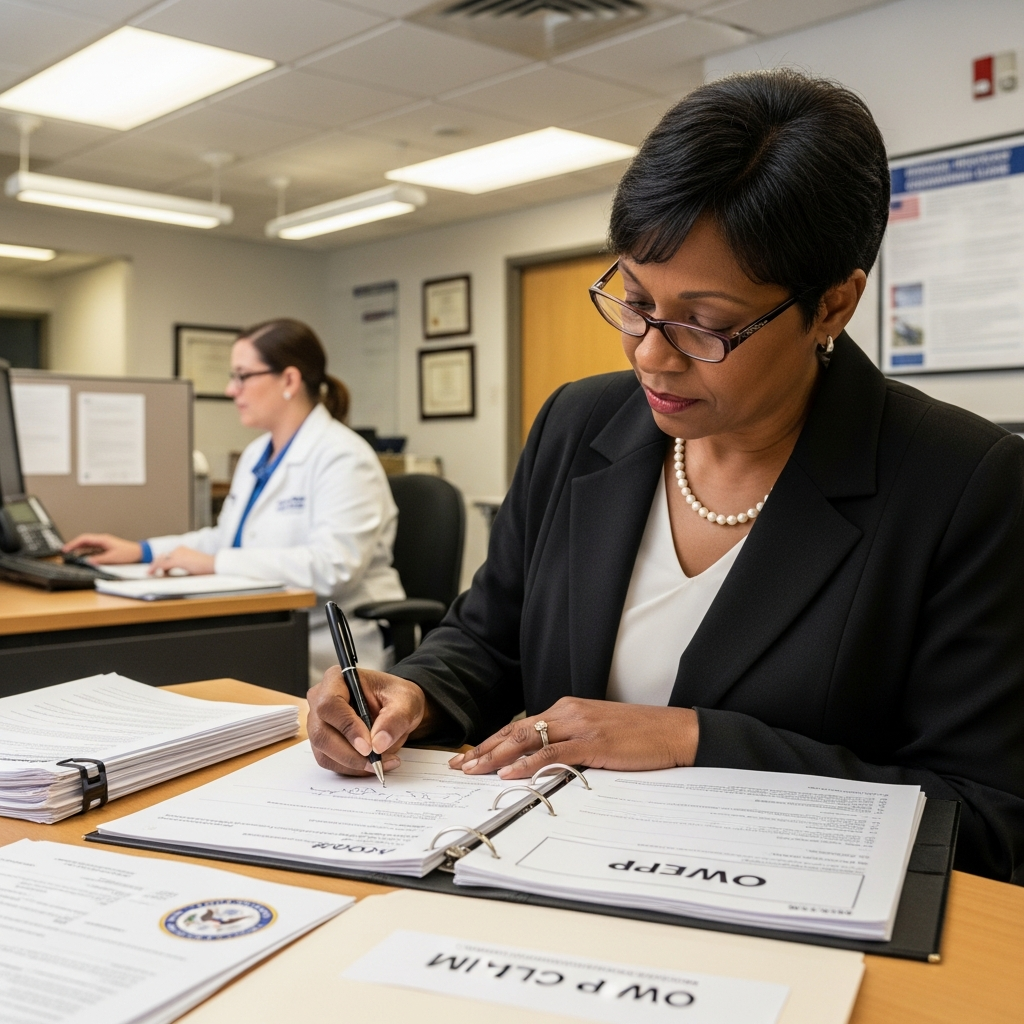
How OWCP Clinics Support Long-Term Injury Recovery

Picture this: It’s been eight months since your workplace injury. You’ve done the initial treatments, sat through the appointments, followed the instructions. And yet, here you are – still hurting, still struggling to get through a full day, still wondering if this is just… how things are going to be now.
Maybe you’re dealing with a back injury that flares up every time you try to do something normal, like carry groceries or sit through a two-hour meeting. Maybe it’s your shoulder, your knee, a repetitive stress injury that crept up so slowly you almost didn’t notice until one day you really noticed. Or maybe the injury itself has healed, at least on paper, but your body hasn’t quite gotten that memo.
If any of that sounds familiar, you’re not alone. And more importantly – you’re not stuck.
Here’s the thing that a lot of injured workers don’t realize until they’re already deep in the weeds of their recovery: there’s a massive difference between *getting treated* and actually getting better. Generic care, rushed appointments, providers who see your OWCP case number before they see you as a person… that kind of experience can leave you feeling like you’re being shuffled through a system that wasn’t really designed with your recovery in mind. Which, honestly? Sometimes it wasn’t.
The Workers’ Compensation programs administered through the Office of Workers’ Compensation Programs exist to protect you. That part’s straightforward. But navigating them, actually accessing the kind of consistent, specialized, long-term care that a serious injury demands? That’s where things get complicated for a lot of people.
This is where OWCP clinics come in – and not in some vague, bureaucratic way. We’re talking about real, meaningful differences in how your recovery unfolds over months and years, not just weeks.
Why Long-Term Care Actually Matters
Short-term thinking is one of the biggest enemies of workplace injury recovery. A sprain gets treated like a sprain. But a sprain that happened under specific occupational conditions, in a body that was already compensating for years of physical demands, in a person who needs to actually return to a demanding job? That’s a completely different situation. And it deserves completely different care.
The truth is, many workplace injuries – especially those involving the musculoskeletal system, neurological function, or psychological trauma – don’t resolve on a predictable six-week timeline. They’re not linear. You’ll have good weeks that make you think you’ve turned a corner, followed by bad days that knock you right back to square one. That cycle is genuinely exhausting, both physically and emotionally.
Long-term, coordinated care addresses that reality. It doesn’t just put out fires – it works to understand why the fires keep starting.
What You’ll Actually Learn Here
In this article, we’re going to walk through exactly how OWCP-authorized clinics are structured to support the kind of ongoing, comprehensive recovery that serious workplace injuries actually require. Not the theoretical version – the practical one.
We’ll talk about how these clinics coordinate your care across different specialties so you’re not playing telephone between providers who’ve never spoken to each other. We’ll get into the documentation side of things too, because honestly, proper medical documentation can make or break your OWCP case in ways that surprise a lot of people. We’ll cover pain management approaches that go beyond just managing symptoms, vocational rehabilitation when returning to your previous role isn’t straightforward, and the mental health component of recovery that is – still, somehow – wildly underaddressed.
There’s also the practical side of what working with an OWCP-authorized clinic actually looks like day-to-day. Because it’s one thing to understand the system in theory and another thing entirely to navigate it when you’re in pain, frustrated, and just trying to get your life back.
That’s really what this comes down to, isn’t it? Getting your life back.
Not your pre-injury life, necessarily – sometimes that’s not the realistic goal, and any provider who promises you that without knowing your situation is doing you a disservice. But a life where you’re functioning, where you’re working toward something, where you’re not white-knuckling through every single day.
That’s achievable. And the right OWCP clinic, with the right long-term support structure in place, can be the difference between spinning your wheels in frustration and actually moving forward.
Let’s get into it.
What OWCP Actually Does (And Why It’s More Complicated Than It Sounds)
Let’s start with the basics, because honestly, the acronym alone is enough to make most people’s eyes glaze over. OWCP stands for the Office of Workers’ Compensation Programs – it’s the branch of the U.S. Department of Labor that manages federal employees’ workplace injury benefits. So if you’re a postal worker, a federal corrections officer, or you work for any federal agency and you get hurt on the job, OWCP is the system that’s supposed to have your back.
The key word there is *supposed to*. Not because the system is broken exactly, but because it’s… layered. Think of it like an old house that’s been renovated multiple times by different owners. The bones are solid, but navigating from the kitchen to the back bedroom requires knowing which door leads where.
The Difference Between Treatment and Recovery
Here’s something that trips people up constantly – and it’s genuinely counterintuitive. There’s a real difference between *treating* an injury and *recovering* from one. Medical treatment is what happens in the immediate aftermath: the ER visit, the surgery, the first round of physical therapy. Recovery, though? That’s the long game. That’s what happens over months or years, as your body (and your life) tries to find a new normal.
OWCP clinics are specifically built for that second part. They’re not urgent care centers. They’re not designed for the chaotic, acute phase of an injury. They’re structured around the reality that a federal employee who hurt their back lifting packages, or developed a repetitive stress injury from years of keyboard work, is going to need sustained, coordinated support – not just a prescription and a “come back if it gets worse.”
How Federal Workers’ Comp Actually Works
Okay, a quick orientation because the system has some quirks that genuinely surprise people.
When a federal employee is injured on the job, their claim gets filed through OWCP under one of several programs – most commonly the Federal Employees’ Compensation Act, or FECA. This is different from state workers’ comp, and that distinction matters a lot. FECA has its own rules, its own forms (oh, so many forms), its own network of authorized providers, and its own timeline for approvals.
That’s where the “approved clinic” piece becomes critical. Not every doctor or facility is authorized to treat OWCP patients and bill the program. It’s similar to how your regular health insurance has in-network and out-of-network providers – except with OWCP, going outside the approved network isn’t just more expensive, it can mean your treatment isn’t covered at all. Which is… a lot of pressure when you’re already dealing with an injury.
Why Long-Term Recovery Is Different From Short-Term Treatment
Think about an injury like a long road trip rather than a quick errand. For a quick errand, you just need enough gas and a rough idea of the destination. A long road trip? You need a map, rest stops, a mechanic who knows your specific car, and someone who can tell you when the engine’s making a sound it shouldn’t be.
Long-term injury recovery – especially for serious musculoskeletal injuries, psychological trauma from workplace accidents, or conditions like PTSD that federal first responders sometimes face – requires that same kind of ongoing navigation. It’s not one appointment, one treatment plan, one provider. It’s a whole ecosystem of care.
OWCP clinics that specialize in long-term recovery understand this. They’re built around continuity – the idea that the provider who sees you in month one should still know your history in month fourteen. They’re also familiar with the administrative side of OWCP, which matters more than people realize. Documentation requirements, progress reports, communication with claims examiners… it’s not glamorous, but it’s the connective tissue that keeps your benefits flowing while you heal.
The Part Nobody Warns You About
Here’s something worth saying plainly: recovering through any workers’ comp system is exhausting in ways that have nothing to do with your physical injury. The paperwork, the waiting periods, the occasional feeling that you’re just a claim number rather than a person – it wears on people.
A good OWCP-aligned clinic recognizes that. Because healing doesn’t happen in a vacuum, and the stress of navigating the system can genuinely slow your physical recovery down. That’s not anecdotal – there’s real evidence that psychological stress affects healing outcomes. So the support that matters isn’t just clinical. It’s human.
Make Your Appointments Work Harder for You
Here’s something most patients don’t realize until way too late: the 15-20 minutes you get with your OWCP provider are only as valuable as the preparation you bring to them. Don’t just show up and answer questions. Come in with a written list – yes, actually written down – of every symptom that’s changed since your last visit, any new pain locations, and specific functional limitations you’ve noticed at home or during daily tasks.
“My back hurts more” tells your provider almost nothing. “I couldn’t lift a gallon of milk on Tuesday without a sharp pain radiating down my left leg” gives them something clinical to document. That documentation? It becomes part of your permanent medical record and directly supports your case. Be your own best advocate here.
Track Everything Between Visits
Get a small notebook – or use your phone’s notes app if that’s more your speed – and keep a daily symptom log. Jot down pain levels on a 1-10 scale, what activities triggered flare-ups, how your sleep was affected, and any emotional struggles. This sounds tedious, and honestly, some days you won’t feel like doing it. Do it anyway.
That log serves two critical purposes. First, it gives your treatment team an accurate picture of your day-to-day reality, not just how you’re feeling on appointment day (which, for some reason, is never representative of your worst days). Second, if your case ever faces a dispute or requires review, that contemporaneous documentation is extraordinarily valuable.
Actually, this reminds me of something – don’t minimize your symptoms when you’re talking to your provider. So many patients, especially people who’ve worked physically demanding jobs their whole lives, instinctively downplay what they’re going through. That stoicism might have served you well on the job, but in an OWCP clinic, it can genuinely work against your recovery and your benefits.
Understand What Your Treatment Plan Actually Says
Ask for a copy of your treatment plan and read it. This seems obvious, but you’d be surprised how many people leave appointments without fully understanding what they’re supposed to be doing between visits – and why.
If physical therapy is prescribed, understand the specific goals: Are you working toward a certain range of motion? Rebuilding functional strength for a return-to-work evaluation? Each goal has a timeline, and knowing that timeline helps you stay engaged rather than just… going through the motions. Ask your therapist what metrics they’re measuring. Ask how you’re tracking. These aren’t annoying questions – they’re exactly what you should be asking.
If your clinic offers case management support – and many OWCP-authorized clinics do – use it. A good case manager can help you navigate the authorization maze, flag when referrals need to be submitted, and coordinate between multiple providers so nothing falls through the cracks. Think of them as your inside guide to a system that isn’t always intuitive.
Don’t Let Authorizations Stall Your Recovery
This is where a lot of recoveries hit unnecessary walls. OWCP requires pre-authorization for many treatments, referrals, and medications – and the timeline for approvals can feel brutal when you’re in pain. The practical workaround? Stay in close contact with your clinic’s billing or authorization team, and follow up proactively rather than assuming approvals are moving along.
If something gets denied, it’s not necessarily the end of the road. Denials can often be appealed with additional medical documentation. Ask your provider specifically what clinical language or supporting evidence is needed to make the appeal stronger. They’ve done this before. They know what the reviewers are looking for.
Build the Relationship, Not Just the Record
Your OWCP providers have seen hundreds of work injury cases. That experience is genuinely useful to you – but only if you treat the relationship as a partnership rather than a transaction. Be honest about what’s working in your treatment and what isn’t. If a medication is giving you side effects that make you skip doses, say so. If an exercise in PT is causing more harm than good, speak up.
Long-term recovery – the real kind, not just paperwork compliance – depends on a treatment team that has accurate information. You’re not being difficult by sharing the full picture. You’re being a good patient. And ultimately, you’re the one who has to live in your body, so make sure the people treating it actually understand what’s going on inside it.
When Progress Feels Invisible
Here’s something nobody tells you upfront: recovery rarely moves in a straight line. You’ll have a week where everything clicks – your pain is manageable, your exercises feel easier, you’re sleeping better. And then, almost without warning, you hit a wall. Maybe you overdid it on a Tuesday and paid for it all weekend. Maybe you just… plateau. And that plateau can feel like failure even when it absolutely isn’t.
The honest truth is that the middle stretch of recovery is where most people quietly give up. Not dramatically. Just gradually – fewer appointments, skipped exercises, a slow drift away from the process. If you recognize yourself in that description, you’re not weak or lazy. You’re human. The solution isn’t motivation speeches. It’s structure. Ask your care team to build clear, measurable milestones into your plan so you can actually *see* progress even when you can’t feel it yet. Sometimes “you’ve increased your grip strength by 30%” is the reality check that keeps you going.
The Documentation Trap
OWCP claims live and die by paperwork. That’s just the reality. And it’s genuinely exhausting – nobody got injured thinking “great, now I get to navigate federal bureaucracy.” But gaps in documentation are one of the most common reasons people lose benefits they’re legitimately entitled to.
What trips people up most? Missing or delayed visit notes, treatment authorizations that weren’t followed up on, and the gap between what a doctor says verbally and what actually ends up in your file. Your clinic’s case managers exist precisely for this – lean on them hard. Don’t assume something got filed. Ask. Confirm. Follow up in writing when you can.
Actually, that reminds me of something worth saying directly: if you ever feel like your paperwork situation is getting away from you, that’s not the time to go quiet and hope it resolves itself. That’s the time to make a call.
Employer Pressure (Real and Imagined)
Some people feel – and sometimes genuinely experience – pressure to return to work before they’re ready. This one’s delicate. There’s often a complicated mix of financial anxiety, loyalty to coworkers, pride, and sometimes actual external pressure from supervisors who may or may not understand what OWCP claims even are.
Here’s what a good OWCP clinic can do: provide you with clear, documented functional capacity evaluations that take the subjective “how do you feel?” out of the equation. When your limitations are spelled out in clinical language by a qualified professional, it’s much harder for anyone to wave them away. Your doctors aren’t just treating you – they’re building a record that protects you. Let them.
Mental Health Is Part of Physical Recovery
This doesn’t get talked about enough. Chronic pain changes people. Months away from work – especially if you loved your job or your identity was tied to what you did – can quietly hollow you out. Depression and anxiety aren’t side effects of recovery. For many people, they’re central features of it.
And yet mental health support is frequently the last thing people ask for and the first thing they minimize. “I’m fine, I’m just frustrated.” Sure. But frustrated every day for six months looks a lot like something worth addressing.
The practical piece here: integrated OWCP clinics that have behavioral health providers on-site or in their referral network can fold mental health treatment into your overall care plan. This matters both for your wellbeing and – genuinely – for your physical outcomes. Pain perception, motivation to comply with treatment, sleep quality… all of it is connected.
When You and Your Provider Aren’t on the Same Page
This happens more than anyone admits. You feel rushed through appointments. Your concerns feel dismissed. You’re nodding along but leaving confused. The clinical relationship in OWCP care is long – we’re often talking months or years – and a bad fit creates real problems for your outcomes.
You have more agency here than you might think. You can ask for a second opinion. You can ask your case manager to clarify your treatment plan in plain language. You can say “I don’t understand why we’re doing this” without it being confrontational. Good providers actually want that conversation.
If something feels consistently wrong and isn’t getting better, it’s worth raising – with your clinic’s patient advocate if they have one, or with your OWCP claims examiner if necessary. Staying silent because you don’t want to make trouble is a cost you’ll end up paying yourself.
What “Long-Term” Actually Means (And Why That’s Okay)
Let’s be honest about something that doesn’t get said enough: recovery from a serious work injury takes time. Like, *real* time. Not the optimistic timeline your brain invented in the first week, and not the worst-case scenario you’re probably Googling at 2am either. Something in between – and usually closer to the longer end than most people expect.
If you’re dealing with a significant musculoskeletal injury, nerve damage, or anything that required surgery, you’re likely looking at months of structured care, not weeks. That’s not a failure. That’s just biology.
OWCP clinics work within this reality rather than against it. The goal isn’t to rush you through treatment so a checkbox gets ticked somewhere. It’s to build a recovery plan that actually holds – one that accounts for the setbacks, the plateaus, and yes, the frustrating weeks where nothing seems to be moving.
The Timeline Nobody Wants to Hear
Here’s a rough – and genuinely rough, because every case is different – sense of what recovery phases can look like through an OWCP clinic
The first few months are usually about stabilization and assessment. Getting imaging done, establishing a diagnosis, starting initial treatment whether that’s physical therapy, pain management, or both. You might feel like you’re not making progress yet. You probably are, even if it doesn’t feel that way.
Months three through six tend to be where active rehabilitation really kicks in. This is often the hardest stretch, honestly – you’re working harder, you’re tired, and the end still feels far away. Functional capacity evaluations might happen around this window to measure where you actually are versus where you started.
Beyond six months, the picture gets more individual. Some people are transitioning back to modified duty or exploring work accommodations. Others are still in active treatment. A smaller number are navigating conversations about permanent restrictions or vocational rehabilitation. None of these paths is wrong – they’re just different.
The point is, if you’re three months in and feeling frustrated that you’re not “done”… that’s completely normal. Please don’t measure your recovery against someone else’s.
Setbacks Are Part of It, Not Evidence That It’s Not Working
This one matters. You’re going to have bad weeks. You’re going to feel like you took two steps forward and one step back – sometimes it’ll feel like five steps back. An uptick in pain after a good stretch of therapy doesn’t mean the treatment failed. It often means your body is working through something.
Good OWCP clinics expect this and build it into how they communicate with you. If your care team seems unfazed by a rough week while still taking your concerns seriously, that’s actually a sign they know what they’re doing.
What you *should* expect is that setbacks get documented, assessed, and responded to – not dismissed.
What You Can Do to Move Things Forward
Your care team carries a lot of this, but you’re not just a passenger here. A few things that genuinely make a difference
– Show up consistently. Gaps in treatment don’t just slow recovery – they can complicate your OWCP case as well. – Be specific about symptoms. “It hurts” is harder to treat than “it’s a sharp pain on the left side when I rotate my shoulder past 90 degrees.” – Ask questions about the why. Understanding why you’re doing a particular exercise or following a certain restriction helps you actually stick to it. – Communicate changes promptly. New symptoms, a sudden worsening, something that doesn’t feel right – tell your clinic. Don’t wait for your next scheduled appointment.
What Comes Next in Your Care
As your treatment progresses, your OWCP clinic will typically work with you on transition planning – whether that means return-to-work preparation, referrals to specialists, or documentation supporting any ongoing limitations. This part of the process involves coordination with OWCP case workers, and it can feel bureaucratic and slow. Fair warning.
Stay organized. Keep copies of everything. And lean on your clinic’s administrative staff when you hit walls – navigating the OWCP system is genuinely part of what they’re there for.
Recovery isn’t linear, and it’s rarely fast. But with consistent, coordinated care – the kind OWCP clinics are specifically structured to provide – most people do get to a better place. That’s not a promise. It’s just what the evidence, and experience, tends to show.
The road back from a serious workplace injury is rarely a straight line. There are good days and frustrating plateaus, moments of real progress and moments where it feels like your body just isn’t cooperating. That’s completely normal – and it’s exactly why having the right clinical team in your corner matters so much more than most people realize when they’re first starting out.
What makes specialized OWCP care different isn’t just the paperwork knowledge or the billing expertise (though honestly, navigating that system without help is its own full-time job). It’s the understanding that you’re not just a case number or a diagnosis code. You’re someone who had a life, a career, and a routine – and you want to get back to it as fully as possible. The best clinics hold that truth at the center of everything they do.
Recovery from a federal workplace injury asks a lot of you. It asks for patience when you’re frustrated, consistency when you’re tired, and trust in a process that can feel maddeningly slow. That’s a heavy lift. And you shouldn’t have to carry it alone.
Actually, that’s the thing people often don’t expect – how isolating the whole experience can feel. You’re dealing with physical pain, yes, but also the uncertainty, the bureaucratic back-and-forth, maybe some financial stress on top of everything else. Having a clinical team that genuinely understands the OWCP process means you’re not spending your precious energy translating between your medical world and your workers’ comp world. Someone else is holding that thread for you.
The physical healing – the gradual rebuilding of strength, the careful management of pain, the work of restoring function – that takes time. But it also takes expertise. It takes providers who know how to document your progress in ways that actually reflect your reality and support your claim. It takes a coordinated approach where nobody’s working in a silo. When all of those pieces come together, you give yourself the best possible chance at a full, sustainable recovery rather than just getting through each appointment.
And here’s what we really want you to take away from all of this… you have more options than you might think. The OWCP system, for all its complexity, exists to support you. The right clinic exists to help you use it.
—
If you’re a federal employee dealing with a work-related injury – whether you’re just starting this process or you’ve been navigating it for a while and feeling stuck – we’d genuinely love to talk with you. Not to pressure you into anything, just to help you understand what’s possible and whether our approach might be a good fit for where you are right now.
Reach out to our team whenever you’re ready. Ask questions. Tell us what’s been hard. That’s what we’re here for – not to hand you a brochure and send you on your way, but to actually sit with you in this and help you figure out the next right step.
You’ve been through a lot. You deserve care that meets that.