Fort Greene Federal Workers: Understanding OWCP Medical Exams
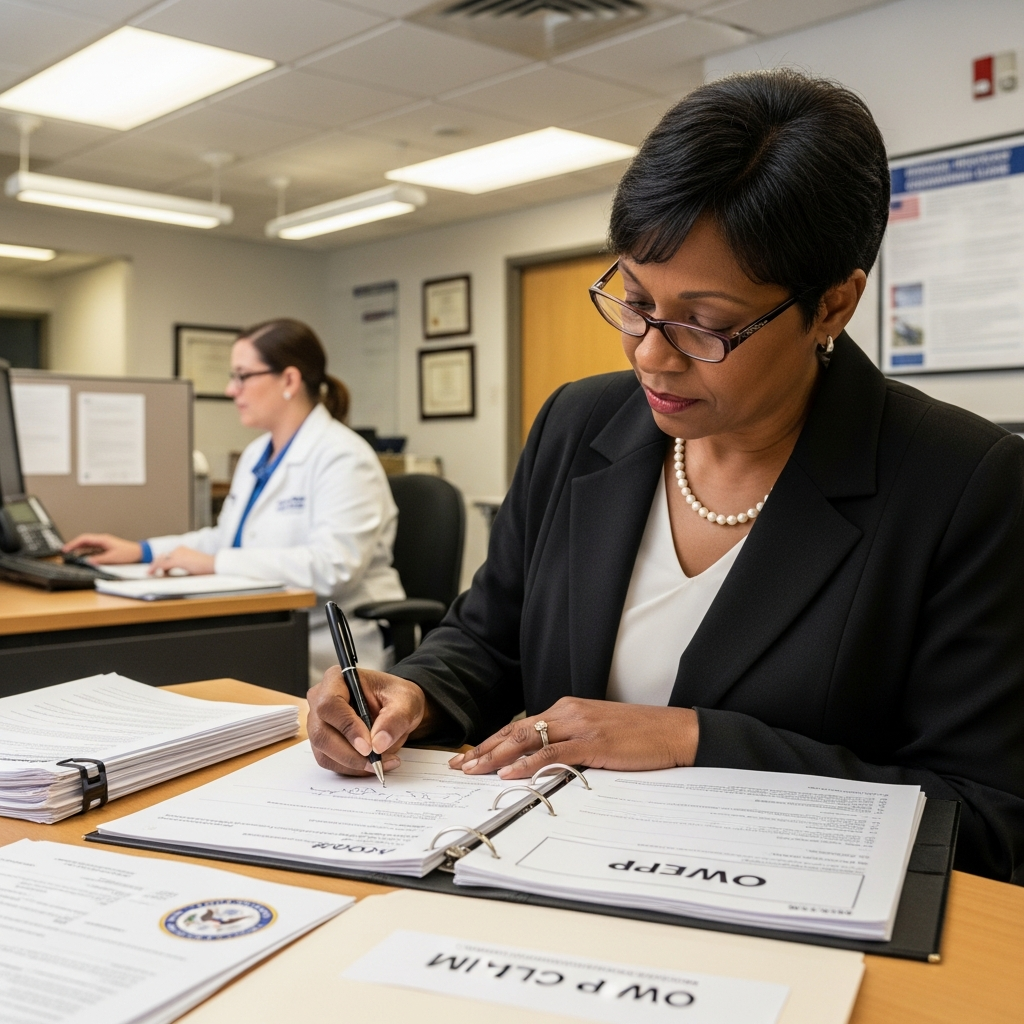
Picture this: You’ve been hurt on the job. Maybe it was one dramatic moment – a fall, a lift gone wrong, something that dropped you to your knees – or maybe it was quieter than that. Years of repetitive strain that built up so slowly you almost didn’t notice until one morning you couldn’t button your shirt without wincing. Either way, you filed your workers’ comp claim, you did what you were supposed to do, and now the federal government is sending you to a medical exam you didn’t schedule, with a doctor you’ve never met, for reasons that feel… opaque at best.
If your stomach just tightened a little reading that? You’re not alone.
For federal workers in Fort Greene and across Brooklyn, OWCP medical exams are one of those parts of the workers’ compensation process that nobody really prepares you for. Your supervisor didn’t explain them. The paperwork doesn’t exactly come with a friendly explainer. And honestly, the whole thing can feel a little like being called to the principal’s office – you know it matters, you’re not entirely sure why, and you really don’t want to say the wrong thing.
Here’s what makes this particular moment so high-stakes for federal employees: the Office of Workers’ Compensation Programs isn’t just some administrative checkbox. OWCP decisions shape your medical care, your wage loss benefits, your ability to return to work on your terms, and in some cases, the entire financial stability of your household. One exam – one doctor, one report, one afternoon – can tip the scales in ways that ripple out for months or years. That’s not meant to scare you. It’s just the reality that you deserve to understand going in.
Why Fort Greene Federal Workers Are in a Unique Position
Fort Greene has a significant concentration of federal employees – postal workers, civilian defense personnel, federal agency staff, transit workers operating under federal programs. And while the OWCP system applies nationwide, there are real logistical and practical differences in how claims play out depending on where you are, which medical providers are in your network, and how familiar your immediate supervisors and HR contacts are with the process.
The thing is, a lot of the federal employees we talk to have done *some* research. They’ve Googled around at midnight, found some forums, maybe read a government PDF that left them more confused than when they started. What’s harder to find is a clear, honest explanation of what these exams actually are, what different types exist, how the doctors are chosen, and – maybe most importantly – what you can do to protect yourself and your claim through the process.
That’s exactly what this is for.
What You’ll Actually Get From This
We’re going to walk through the whole picture together. We’ll start with the basics – what an OWCP medical exam actually is, and how it’s different from your regular treatment appointments with your own doctor. (Spoiler: the difference matters enormously, and a lot of workers don’t realize it until it’s too late.)
Then we’ll get into the different types of exams you might face, because they’re not all the same. A second opinion exam and a referee exam serve different purposes, happen at different points in your claim, and carry different weight. Knowing which one you’re being sent to changes how you should prepare.
We’ll also talk about what to expect in the room – how long these exams typically last, what kinds of questions get asked, why the doctor might seem more interested in your paperwork than your actual pain. And we’ll cover what your rights are throughout this process, because you have them, even when it doesn’t feel that way.
Actually, that last piece might be the most valuable part of all of this. Federal workers are often surprised to learn they have more agency in this process than they’ve been led to believe.
The OWCP system wasn’t designed to be cruel – but it also wasn’t designed with your personal comfort or clarity in mind. It’s complex, it moves slowly, and it tends to reward the people who understand how it works.
You deserve to be one of those people.
What OWCP Actually Is (And Why It’s Confusing)
Let’s start with the basics, because honestly, the Office of Workers’ Compensation Programs has a name that tells you almost nothing useful. It sounds like a generic government office that handles paperwork – and okay, it does handle a lot of paperwork – but it’s really the federal system that decides whether you, as a federal employee, get medical coverage and wage replacement after a work-related injury or illness.
Think of it like this: if you worked at a private company and got hurt, you’d file a workers’ comp claim through your state. But federal workers operate under a completely separate system – one that’s run by the Department of Labor rather than your actual employing agency. Which means your supervisor at the VA or the post office or whatever federal building you work in? They don’t control your benefits. OWCP does.
That distinction matters more than it might seem at first.
The Three Programs Under the OWCP Umbrella
Here’s where it gets a little layered. OWCP isn’t one program – it’s actually three, and which one applies to you depends on your job.
Most federal civilian workers in Fort Greene – think postal workers, federal court employees, civilian defense contractors – fall under FECA, the Federal Employees’ Compensation Act. FECA is the big one. It covers medical treatment, wage loss benefits, and vocational rehabilitation if you need it. The other two programs cover coal miners (Black Lung) and longshore workers, which probably aren’t relevant to your situation, but it’s worth knowing they exist so you’re not confused when you see OWCP materials referencing programs that have nothing to do with you.
So for the purposes of everything else in this article, we’re really talking about FECA.
What a Medical Exam Actually Does in This System
Okay, here’s the part that trips people up – and honestly, it tripped me up when I first started learning about this system too.
An OWCP medical exam isn’t like your regular doctor’s appointment. You’re not going in to get treated. The exam exists to generate documentation that answers specific medical-legal questions: Is your condition work-related? What are your functional limitations? Are you at maximum medical improvement? Can you work, and if so, doing what?
It’s more like… an evaluation than a visit. The doctor is essentially writing a report for the claim file, not prescribing your next course of treatment. Some people find this unsettling – you’re being examined by someone who isn’t your doctor, who has no ongoing relationship with you, and whose job it is to render an opinion that carries real weight in your case. That’s a fair thing to feel uncomfortable about.
There are also different *types* of exams within the OWCP world. A second opinion examination happens when OWCP wants another physician’s perspective on your treating doctor’s conclusions. A referee examination – sometimes called an impartial examination – is ordered when those two opinions conflict. And a defense medical examination can come into play if your case is contested. Each one has a slightly different purpose and a slightly different set of stakes.
Why Fort Greene Workers Have Some Unique Considerations
Fort Greene sits in a part of Brooklyn with a genuinely diverse mix of federal employment – from the Brooklyn Navy Yard’s federal tenants to postal facilities to the federal courts downtown. The occupational exposures and job demands vary wildly. A letter carrier dealing with a repetitive stress injury is navigating OWCP very differently than an administrative worker with a stress-related condition, even though both are going through the same basic claims process.
And New York City adds another layer. There’s no shortage of medical providers here, which sounds like a good thing – and mostly it is – but it also means the quality and OWCP-familiarity of providers varies enormously. Not every physician in the city understands how to write a report that actually holds up in the OWCP system. A technically excellent doctor who doesn’t know how to properly document causal relationship can inadvertently sink a legitimate claim.
That’s not a reason to panic. It’s just a reason to understand what you’re working with – which is exactly what the rest of this article is here to help you do.
What to Actually Bring to Your OWCP Exam
Here’s something most workers don’t realize until it’s too late: the IME doctor isn’t there to treat you. They’re there to evaluate you – and that evaluation starts the moment you walk through the door. So come prepared like you’re making a case, not just attending an appointment.
Bring every piece of documentation you have. That means your original incident report, all treatment records, imaging results (bring the actual films or the CD if you have them, not just the radiologist’s written report), and a typed list of your current medications with dosages. Handwritten notes are fine in a pinch, but typed looks organized and serious.
Also – and this is important – bring a written symptom log if you’ve been keeping one. If you haven’t been keeping one, start today. A simple notes app on your phone works fine. Date, time, what hurt, what you couldn’t do. That kind of contemporaneous record is gold.
How to Talk to the Examining Doctor
Be honest. Completely, specifically honest. But – and here’s the thing people mess up – don’t minimize to seem tough, and don’t exaggerate to seem hurt. Both backfire badly.
The doctor will often ask you to rate pain on a scale of 1-10. Think carefully before you answer. If you say a 3 but you’ve been out of work for six months, that’s a contradiction that will absolutely show up in the report. Describe your *worst* days, your *typical* days, and what you literally cannot do anymore. “I can’t carry groceries with my left arm” is infinitely more useful than “my shoulder hurts sometimes.”
If something hurts during the physical examination, say so – out loud, clearly, in the moment. Don’t tough it out silently. The examiner is documenting your responses, and silence gets interpreted as tolerance.
The Paper Trail You Should Already Be Building
Your OWCP case lives and dies on documentation. Think of it like a paper spine holding everything upright. If the spine is weak, the whole thing collapses.
Make sure your treating physician is writing detailed, specific notes – not just “patient reports back pain, continue treatment.” Those vague entries hurt you. Ask your doctor to document functional limitations explicitly: what you can’t lift, how long you can sit or stand, whether you’re having trouble with stairs, sleep, concentration. The more specific, the better.
Request copies of everything. Keep a dedicated folder – physical or digital, doesn’t matter – organized by date. You’d be surprised how often critical records get lost in the shuffle of a long claim.
One more thing: if you’ve seen multiple specialists, make sure all those records are in your OWCP file. Missing records are a common reason claims get delayed or disputed. Don’t assume your case manager has everything.
Timing Matters More Than You Think
OWCP exams are sometimes scheduled on short notice – sometimes uncomfortably short notice. You generally have the right to request a reasonable accommodation if a scheduling conflict arises, but you need to act quickly and communicate in writing. An unreturned phone call doesn’t protect you. An email or fax does.
If you’re taking a medication that affects your cognitive clarity or pain levels, think about timing. Some workers schedule exams earlier in the day when their energy is highest. Others need to take pain medication beforehand just to function – which is completely legitimate, just make sure you tell the examiner what you’ve taken. Transparency matters here.
After the Exam Is Over
Don’t just go home and wait. Write down everything you remember about the exam – what questions were asked, what movements they tested, what you reported. Do this the same day while it’s fresh. If the IME report later contains inaccuracies (and it happens more than you’d think), your contemporaneous notes are how you challenge them.
You’re entitled to obtain a copy of the IME report. Review it carefully. If there are factual errors – wrong dates, misquoted symptoms, missing diagnoses – those can often be addressed through your treating physician’s rebuttal statement.
Connecting with a workers’ comp attorney or an experienced OWCP advocate in the Fort Greene area is genuinely worth considering, especially if your claim is complex or has already hit roadblocks. Some offer free initial consultations. The system is complicated, and having someone in your corner who speaks the language fluently makes a real difference.
When the System Feels Like It’s Working Against You
Let’s be honest – navigating OWCP is not a pleasant experience for most federal workers. It’s slow, it’s confusing, and there are moments where it genuinely feels like the whole thing is designed to make you give up. You’re not imagining that. The system is bureaucratically dense by nature, and when you’re already dealing with a work injury, that added weight is real.
The good news? Most of the common pitfalls are predictable. Which means they’re avoidable – if you know what to look for.
The Doctor You See Matters More Than You Think
Here’s something that catches a lot of Fort Greene federal workers off guard: OWCP doesn’t care about your regular doctor’s opinion the way you might expect. The agency relies heavily on something called a Second Opinion Medical Examination (SOME) or an Independent Medical Examination (IME) – and those doctors are selected by OWCP, not by you.
What does that mean practically? The physician examining you may have seen hundreds of federal workers before you, and they’re producing a report for the agency. That’s not automatically sinister, but it does mean your own medical documentation needs to be ironclad before you walk in. Vague language in your treating physician’s notes – things like “patient reports pain” without objective findings – can quietly undermine your case.
The solution here is actually something you can act on. Work with your treating physician to ensure your medical records are specific. Documented range of motion measurements, imaging results, functional limitations in concrete terms. “Unable to lift more than 10 pounds without sharp pain” beats “chronic discomfort” every single time.
What Happens During the Exam (And Why People Freeze)
A lot of workers go into their OWCP medical exam underprepared – not because they’re not smart, but because nobody told them what to expect. You arrive, you wait (sometimes a long time), and then a doctor you’ve never met has maybe 30-45 minutes to assess your condition. It feels rushed. It can feel adversarial, even when it isn’t.
People often freeze or minimize their symptoms in that environment. It’s a natural human instinct – you don’t want to seem dramatic, you want to seem tough. But this is genuinely one of the worst things you can do for your claim. The examiner is documenting your functional capacity on that specific day. If you downplay your symptoms, that becomes part of the official record.
Be honest. Accurate. If certain movements hurt, say so – and say it specifically. “That rotation causes a sharp pain that runs down my left arm” is far more useful than “yeah, that’s a little uncomfortable.”
Documentation Gaps: The Silent Claim Killer
This one is probably the most frustrating challenge because it often surfaces months after the fact. You filed your claim, you thought everything was in order, and then you get a denial or a delay because there’s a gap in your treatment records. Maybe you stopped going to PT for six weeks. Maybe there’s no documentation connecting your work duties to your diagnosis.
OWCP requires what’s called a rationalized medical opinion – basically, a physician explaining the connection between your job and your injury in clear, logical terms. Without it, even legitimate injuries can get denied. This isn’t fair, but it’s real.
If you discover a gap, don’t panic – address it proactively. Get a narrative report from your treating physician that addresses the timeline directly. A good occupational medicine doctor knows how to write these. Actually, this is worth saying plainly: if your current doctor isn’t familiar with OWCP standards, finding one who is can make a significant difference.
When You Disagree With the Exam Findings
It happens. The OWCP-selected physician reaches conclusions that don’t match your lived experience or your treating doctor’s findings. You feel dismissed, maybe a little blindsided.
Here’s what you need to know – you’re not without options. You can submit a rebuttal to the findings through your claims examiner, supported by your own physician’s documentation. Timing matters here, so don’t sit on it. The 30-day window moves faster than you’d expect.
You can also request a referee physician if there’s a conflict between medical opinions, though that process has its own timeline and complications.
The honest truth is that this part of the process rewards persistence. Not aggression – persistence. Showing up, following through, and keeping meticulous records of every communication. Keep a simple log. Dates, names, what was discussed. It sounds tedious, but there will likely come a moment where you’re very glad you did it.
What to Actually Expect After Your OWCP Medical Exam
Here’s the thing nobody tells you upfront: the waiting is often harder than the exam itself. You’ve done the stressful part – you’ve shown up, answered the questions, let the doctor review your case. And now… you wait. That’s genuinely difficult, especially when you’re dealing with a work injury that’s already turned your life upside down.
So let’s talk about what “normal” actually looks like, because the OWCP process moves at its own pace, and that pace is rarely fast.
The Timeline Is Longer Than You’d Hope
Most Federal workers in Fort Greene are surprised – sometimes frustrated – to learn that OWCP decisions don’t come back in a few days. After a second opinion or referee medical exam, it typically takes several weeks to a few months for a determination to come through. The examiner writes their report, that report goes back to your claims examiner, and then the Office of Workers’ Compensation Programs makes a decision based on everything in your file.
That’s a lot of hands touching your case. And each pair of hands takes time.
If you’re waiting on a routine claims decision following a medical exam, somewhere in the range of 60 to 90 days isn’t unusual. It can feel like an eternity when you’re waiting to find out whether your treatment will be approved or your wage loss benefits will continue. But if you hit the 30-day mark and haven’t heard anything? Reach out to your claims examiner. You’re allowed to check in. You should check in.
The Exam Report Is Just One Piece
This is worth understanding clearly, because a lot of people assume the medical examiner’s report is the final word. It isn’t. The doctor’s findings go into your file as medical evidence – important evidence, certainly – but your claims examiner weighs that against everything else: your treating physician’s notes, your original injury documentation, any prior determinations, and the relevant regulations under the Federal Employees’ Compensation Act.
So if you’ve been seeing a specialist who knows your case inside and out, their documentation still matters. Don’t assume one exam rewrites the whole story.
If the Decision Doesn’t Go Your Way
Let’s be honest about this possibility, because it happens. Sometimes the OWCP medical examiner’s conclusions conflict with your treating doctor’s opinions. Sometimes a claim gets denied or modified in a way that feels completely wrong given what you’re going through every day.
You have options. Actually, you have several.
You can request reconsideration, submit additional medical evidence, or – and this is often the most powerful move – have your treating physician respond directly to the examiner’s findings. A well-written rebuttal from your doctor that specifically addresses the points in the exam report can carry real weight. This isn’t the time for a generic letter; it needs to be specific, thorough, and responsive.
There’s also the Employees’ Compensation Appeals Board if you need to go further down that road. It’s a longer process, but it exists precisely because these decisions get contested.
Keep Your Documentation Tight Going Forward
Whatever the outcome of your exam, now is a good time to get organized if you haven’t already. Keep copies of everything – the exam notification letter, any paperwork you received, your own notes from the appointment, and all correspondence with OWCP. Federal workers sometimes assume these records are being perfectly maintained somewhere in the system. They’re not always.
Your case file is only as strong as the documentation in it.
Continue attending your regular medical appointments and following your treatment plan. Gaps in treatment – even understandable ones – can be used to suggest your condition isn’t as limiting as claimed. That might feel unfair, but it’s the reality of how these cases are evaluated.
You Don’t Have to Navigate This Alone
Fort Greene has resources. Union representatives, employee assistance programs, and workers’ compensation attorneys who specialize in FECA cases can all provide guidance when the process gets complicated. And it does get complicated sometimes – that’s not a failure on your part, that’s just the nature of a system with a lot of moving parts.
The most important thing? Stay engaged. Follow up. Ask questions when something doesn’t make sense. The workers who get the best outcomes tend to be the ones who stay actively involved in their own cases, even when the waiting feels endless.
You’ve got a lot to think about. Federal workers who’ve been injured on the job are already dealing with enough – the pain, the paperwork, the uncertainty of not knowing what comes next. And now there’s an OWCP medical exam on the horizon, which honestly can feel like one more thing to worry about.
But here’s what we want you to take away from all of this: you’re not as alone in this as it might feel right now.
The OWCP process is genuinely complicated. It’s designed by bureaucrats, administered by insurance systems, and evaluated by physicians who – through no fault of their own – may not fully understand your day-to-day reality as a federal employee in Fort Greene. That gap between what you’re experiencing and what ends up on paper? That’s exactly where things can go wrong. And that’s exactly why understanding what these exams are actually looking for, how they work, and what your rights are within that process matters so much.
Knowledge is a kind of armor here. Not in some abstract, motivational-poster way – but practically. When you walk into an OWCP medical exam knowing what to expect, you’re less likely to undersell your symptoms, forget to mention something important, or feel so rattled that you leave the appointment feeling like it didn’t go the way it should have.
Your Health Is the Foundation of Everything
One thing that tends to get lost in all the bureaucratic noise is this: the medical side of things isn’t just about proving your case. It’s about actually getting better. The documentation matters, yes – but so does finding a provider who genuinely understands occupational injuries, who takes your experience seriously, and who can help you move toward real recovery rather than just manage the paperwork.
If you’re still figuring out the medical piece, or you’re working with providers who don’t have much experience with OWCP cases specifically… it might be worth exploring your options. Not because anything you’ve done so far is wrong, but because having the right support in your corner can make a real difference – both for your health outcomes and for how your case is documented.
We’re Here If You Need Us
At our clinic, we work with federal workers navigating exactly this kind of situation. We understand the OWCP system, we know what documentation matters, and more importantly – we know that behind every case file is a real person who just wants to feel better and get back to their life.
If you have questions, or you’d just like to talk through where you are in the process, we’d genuinely love to hear from you. There’s no pressure, no hard sell. Just a conversation with people who actually get what you’re going through.
Fort Greene is a community of hardworking people. Federal workers who show up every day, often in jobs that carry real physical and emotional demands. You deserve care that meets that reality – not a system that makes you feel like a number in a file.
Reach out whenever you’re ready. Whether that’s today, or after you’ve had time to sit with all of this… we’ll be here. And we’ll be glad you called.