10 Benefits Federal Workers Receive Under DOL Work Comp
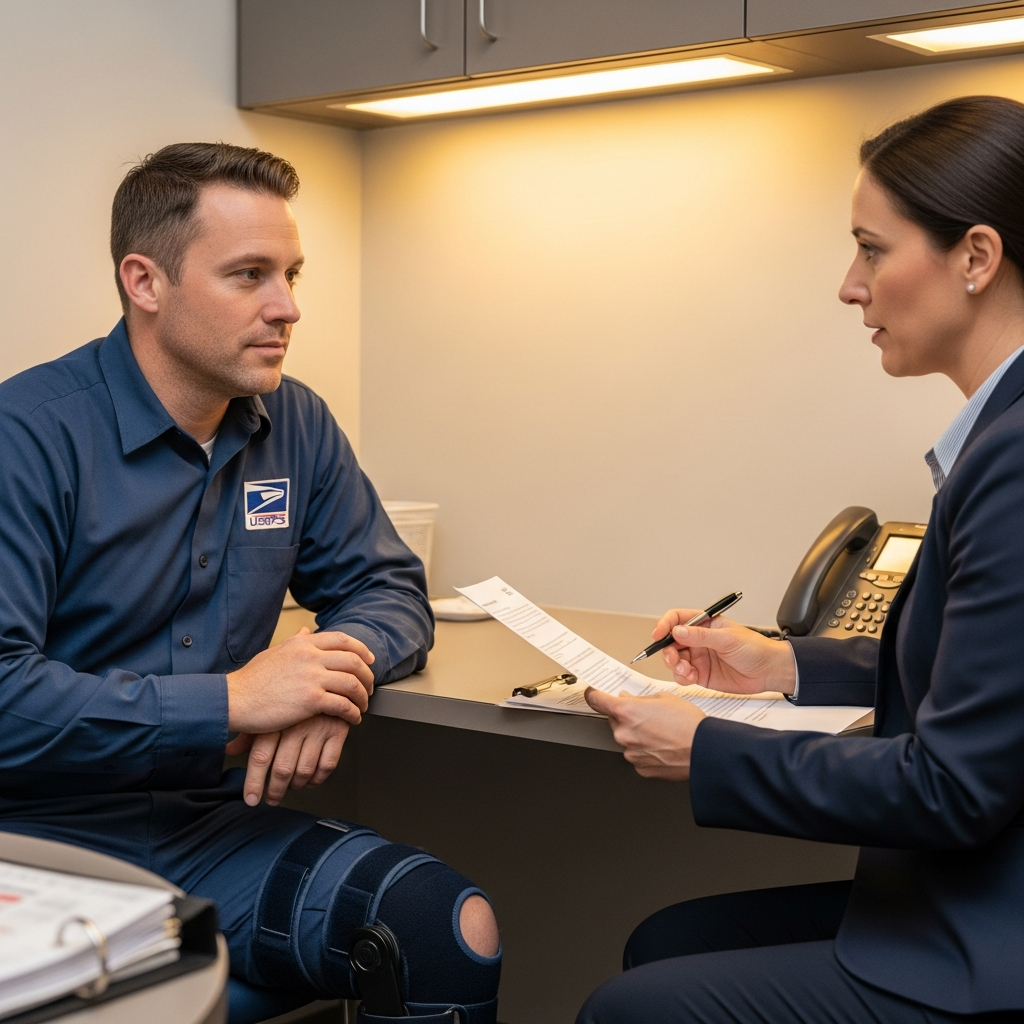
Picture this: You’re a federal employee, and you’ve just hurt your back lifting equipment at work. Maybe it’s not dramatic – no ambulance, no emergency room. Just that awful moment where something shifts, and you know it’s bad, and then the slow dread sets in. *How am I going to pay for this? What happens to my paycheck? Am I going to lose my job while I’m recovering?*
That feeling – that knot of anxiety sitting right alongside the physical pain – is something nobody warned you about when you took your federal position.
Here’s what a lot of federal workers don’t realize until they need it most: you’re not navigating this alone, and you’re not unprotected. The Department of Labor’s Office of Workers’ Compensation Programs, known as OWCP, exists specifically to stand behind you when work injuries happen. And the benefits it provides are… honestly, more comprehensive than most employees know. Which is exactly the problem.
Why Most Federal Workers Are Caught Off Guard
There’s a strange irony in federal employment. You’ve got one of the more robust workers’ compensation systems in the country sitting right there in your benefits package, and yet most people only discover what it actually covers when they’re already in pain, already stressed, and already trying to figure out what to do next. That’s not ideal timing for a crash course.
The Federal Employees’ Compensation Act – FECA for short – has been protecting federal workers since 1916. Over a century of protections. And still, so many employees walk into a workplace injury completely unaware of what they’re entitled to claim, what deadlines they’re working against, or what kinds of support they can access beyond just basic medical coverage.
It’s a little like having a really good insurance policy stuffed in a drawer somewhere. You know it exists. You’re just not totally sure what’s in it.
This Actually Matters More Than You Think
Here’s why understanding your DOL work comp benefits isn’t just useful trivia – it’s genuinely important for your financial security and your health outcomes. Studies have consistently shown that workers who understand their rights after an injury recover faster and return to work more successfully. Not because knowing the rules magically heals a back injury, but because the stress of financial uncertainty is its own kind of damage. When you’re lying awake at 2am wondering how you’ll cover rent while you’re out of work, that’s not just emotionally hard – it actively interferes with physical healing.
Federal employees who know their OWCP benefits can focus on recovery instead of scrambling through paperwork and panic. That’s a meaningful difference.
And the stakes aren’t small. We’re talking about your income, your medical care, your long-term earning capacity, and in some cases, your ability to care for your family if something serious happens. These aren’t abstract bureaucratic categories. They’re the real texture of your life.
What You’re About to Learn
In this article, we’re walking through ten specific benefits that federal workers are entitled to under DOL workers’ compensation – benefits that cover everything from wage replacement and medical treatment to vocational rehabilitation and even death benefits for surviving family members. Some of these will probably surprise you. A few might feel immediately relevant to something you or a coworker is already dealing with.
We’re also going to explain things in plain language, because FECA documentation can read like it was written by someone who genuinely enjoys making things confusing. (No offense to anyone in federal documentation. It’s just… a lot.)
Whether you’re currently recovering from a work-related injury, you’ve got a claim in process and you’re not sure you’re getting everything you’re entitled to, or you’re simply the kind of person who likes to understand their rights *before* something goes wrong – this breakdown is for you.
Actually, that last type of person? That’s exactly who tends to come out of a workers’ comp situation in the best shape. The ones who already had some idea of what to expect. So if that’s you, good instinct.
Let’s get into it.
How Federal Workers’ Comp Actually Works (The Short Version)
If you’ve ever tried to read an actual FECA document – the Federal Employees’ Compensation Act, which is the law that governs all of this – you might have felt like you accidentally picked up a legal textbook in a foreign language. It’s dense. So let’s break down what’s actually happening here, in plain terms, before we get to the good stuff.
Federal workers’ compensation is run entirely by the Department of Labor’s Office of Workers’ Compensation Programs, or OWCP. Not your agency’s HR department. Not a private insurance company. The DOL. That distinction matters more than it sounds, because it means the program operates under federal law, with federal oversight, and federal funding – which is part of why it tends to offer more comprehensive protections than most state workers’ comp programs. Think of state workers’ comp as a regional grocery store chain. Federal FECA benefits are more like a well-stocked national warehouse. Same basic concept, very different selection.
Who’s Covered (And It’s Broader Than You’d Think)
Here’s something that surprises a lot of people: FECA doesn’t just cover full-time federal employees sitting behind a desk in a government building. Coverage extends to part-time federal workers, employees in overseas postings, certain volunteers, and even some contract workers in specific circumstances. Postal workers, park rangers, TSA agents, military civilian employees – if you’re a civilian employee of the federal government, there’s a very good chance FECA applies to you.
The injury itself just needs to be work-related. That can mean an acute injury – a slip, a fall, a lifting accident – or something that developed over time, like a repetitive stress injury or an occupational illness. Actually, that second category catches people off guard all the time. You don’t have to have a dramatic “the moment it happened” story to qualify. Sometimes it’s years of the same motion, the same chemical exposure, the same stress on a joint. That counts too.
The Three-Way Relationship Worth Understanding
When you’re navigating FECA benefits, there are essentially three parties involved: you (the injured worker), your federal employer (the agency), and the DOL’s OWCP. Your agency plays a role early on – filing paperwork, continuing your pay in certain situations – but OWCP is ultimately the decision-maker. They approve or deny claims, authorize treatment, and manage your case going forward.
It’s a little like being a patient, a hospital, and an insurance company all in a room together. Your employer wants you back at work. OWCP is applying the rules of the law. And you’re somewhere in the middle, ideally recovering and getting the support you’re entitled to. Understanding who does what – and who to actually contact when things go sideways – can save you an enormous amount of frustration.
The “Whole Person” Philosophy (It’s Real)
One thing that genuinely distinguishes FECA from a lot of other compensation systems is its intent to make you whole. Not just patch you up enough to function, but actually address the full scope of what a work-related injury costs you. Medical expenses, lost wages, vocational rehabilitation if you can’t return to your previous role, and even compensation for permanent impairment. The law was designed with the understanding that getting hurt at work disrupts your entire life – not just your paycheck.
That said – and this is the counterintuitive part – navigating the system to actually receive these benefits isn’t always straightforward. The protections are robust on paper, but paperwork errors, missed deadlines, and procedural missteps can complicate claims even when they’re completely legitimate. It’s genuinely one of those situations where knowing your rights matters as much as having them.
The Difference Between Continuation of Pay and Compensation
Before we get to the full list of benefits, one quick distinction that trips people up constantly: there’s a difference between Continuation of Pay (COP) – which kicks in immediately after a traumatic injury and comes from your agency – and workers’ compensation payments, which come from OWCP. COP covers up to 45 calendar days. After that, you’re in OWCP territory. They’re related, they overlap in timing, but they’re not the same thing. Mixing them up can lead to some genuinely confusing moments when you’re trying to figure out where your check is coming from.
With that foundation in place, here are the ten benefits that make federal workers’ comp worth understanding in depth.
Know Your Rights Before You Need Them
Here’s something most federal employees don’t find out until they’re already hurt and scrambling: the OWCP system rewards the people who understand it *before* they ever file a claim. So let’s talk about what that actually looks like in practice.
First – and this is genuinely important – request a copy of your agency’s injury compensation handbook right now. Not when you’re injured. Now. Every federal agency is required to have one, and your Injury Compensation Program Administrator (ICPA) is required to give it to you. Most people don’t even know this person exists. Find out who yours is today, save their contact information, and introduce yourself if you can. That relationship matters more than you’d think when you’re suddenly dealing with paperwork at 2am because your knee gave out on a loading dock.
Document Everything Like Your Benefits Depend On It (They Do)
The OWCP system is paperwork-heavy in a way that can genuinely shock people who aren’t prepared. One of the most actionable things you can do right now? Start keeping a simple personal health log. Nothing fancy – a notebook, a notes app, whatever works for you. Record any workplace incidents, near-misses, physical discomforts related to your job duties, or conversations with supervisors about hazardous conditions.
If you’re ever injured, you’ll have 30 days to report it to your supervisor and three years to file a formal claim. But here’s what most people miss: the quality of your documentation in those first hours and days often determines how smoothly everything goes. Get a witness if possible. Write down exactly what happened – surfaces, lighting, what you were carrying, what you said to whom. Specific details. Timestamps. This isn’t being paranoid; it’s being smart.
Also, when you do file? Form CA-1 covers traumatic injuries (something specific happened on a specific day). Form CA-2 is for occupational disease or conditions that developed over time. Using the wrong one can create delays that feel completely unnecessary when you’re already dealing with pain and stress.
Don’t Leave Medical Benefits on the Table
OWCP covers all *reasonable and necessary* medical treatment related to your work injury – and that’s broader than most people realize. Chiropractic care, physical therapy, specialist visits, prescription medications, durable medical equipment… it’s a comprehensive coverage picture. But here’s the catch: your treating physician needs to be on the OWCP-authorized provider list, and every treatment needs to be clearly tied back to your work-related condition in the documentation.
This is where a lot of federal workers lose benefits they absolutely deserve. They see a doctor who isn’t familiar with OWCP billing, the paperwork doesn’t connect the dots properly, and suddenly claims are being questioned or denied. Ask your doctor explicitly if they’ve worked with OWCP patients before. It’s not an awkward question – it’s a necessary one.
Continuation of Pay vs. Leave – Understand the Difference
If you suffer a traumatic injury, you may be entitled to Continuation of Pay (COP) for up to 45 calendar days – and this is your full salary, not a reduced benefit. The key is that you have to assert your COP rights promptly, and your agency cannot force you to use sick or annual leave in place of COP for covered injuries. Some supervisors – not out of malice, just unfamiliarity with the rules – will try to route things through regular leave channels. Know that you have the right to request COP specifically.
Write “I am requesting Continuation of Pay pursuant to 5 U.S.C. 8118” on your claim form if there’s any ambiguity. Formal language, clearly stated. It signals that you know what you’re talking about.
Get Help When Things Get Complicated
The OWCP appeals process exists for a reason – claim denials happen, and they’re not always final. If your claim gets denied, you have options: reconsideration, an Employees’ Compensation Appeals Board (ECAB) appeal, or a hearing. Each has different timelines and requirements.
Here’s the honest truth though: navigating appeals on your own while you’re injured and stressed is genuinely hard. OWCP attorneys who specialize in federal workers’ comp work on contingency in many cases – meaning you don’t pay unless they win. And some federal employee unions offer representation support. Don’t assume a denial is the end of the road. For federal workers specifically, it often isn’t.
The Parts Nobody Warns You About
Let’s be honest – navigating federal workers’ compensation through the Department of Labor isn’t always a smooth process. The benefits are genuinely good, better than most state systems. But the path to actually receiving them? That’s where things get complicated. And if you’re already dealing with a work injury, the last thing you need is a bureaucratic maze catching you off guard.
So let’s talk about the real stuff.
The Paperwork Mountain Is Real
Here’s what trips up more federal employees than anything else: the forms. Specifically, getting them right the first time. The OWCP (Office of Workers’ Compensation Programs) requires detailed documentation, and they’re not shy about rejecting claims that have gaps, inconsistencies, or missing medical evidence.
Form CA-1 for traumatic injuries, CA-2 for occupational disease – these aren’t complicated to understand, but they’re absolutely unforgiving when filled out carelessly. A wrong date, a vague description of how the injury occurred, a treating physician who isn’t familiar with federal comp requirements… any of these can stall your claim for weeks or months.
The solution here is genuinely simple, even if it’s not easy: slow down. Document everything. When you first report your injury, write down exactly what happened – where you were, what you were doing, what caused it, who witnessed it. Don’t summarize. Be specific. “I slipped” is not the same as “I slipped on wet tile near the east entrance at approximately 2:15 PM while carrying files to the conference room.”
And get a doctor who understands federal workers’ comp. Actually, this matters more than most people realize. A physician unfamiliar with OWCP requirements may not provide the “medical rationale” the system demands – which is more than just a diagnosis. It’s a documented link between your condition and your work duties.
The Waiting Game Will Test Your Patience
Even when everything goes right, OWCP processing takes time. We’re talking weeks, sometimes longer, before you see continuance of pay or compensation flowing. For someone who’s injured and anxious about their paycheck, that gap feels enormous.
Your agency is supposed to provide up to 45 days of Continuation of Pay (COP) for traumatic injuries – and that should kick in relatively quickly. But if there are disputes about whether the injury qualifies, or if your supervisor drags their feet on paperwork… things slow down fast.
What actually helps? Stay in contact with your agency’s workers’ comp coordinator. Most federal agencies have one, and frankly, they’re your best ally in the early stages. They know the internal process, they can push on delayed paperwork, and they’ve seen these cases before.
Disputes Feel Impossible – But They’re Not
OWCP denies claims. It happens more than people expect, and it can feel completely defeating. Maybe they decided your condition isn’t work-related. Maybe they cut off benefits that were already approved. Maybe the whole thing just feels unfair.
Here’s what you need to know: you have the right to appeal. You can request reconsideration within one year of a decision, or you can appeal to the Employees’ Compensation Appeals Board (ECAB). These aren’t quick processes, but they work. Many claims that were initially denied get approved on appeal – particularly when new medical evidence is submitted.
This is also the point where getting a qualified workers’ comp attorney or representative becomes worth serious consideration. Some people try to handle appeals alone and do fine. Others… don’t. If your claim involves significant lost wages or a permanent condition, professional help typically pays for itself.
When You’re Ready to Return to Work
This one catches people off guard in a different way. The return-to-work process under OWCP has real structure – and if you’re not careful, accepting certain work assignments (or refusing them) can affect your compensation.
If your agency offers you a modified or limited duty position that your doctor approves, refusing it without good reason can jeopardize your benefits. On the flip side, going back before you’re medically ready is a mistake that can turn a temporary condition into something permanent.
The middle path? Communicate openly with your physician about your actual limitations, make sure those limitations are clearly documented, and don’t let pressure from your agency – however well-intentioned – push you back to full duty before your body is ready.
None of this is designed to scare you. These challenges are manageable. But walking in with your eyes open means you won’t lose benefits simply because nobody told you the hard parts.
What to Actually Expect When You File
Let’s be honest about something: the federal workers’ comp system is not fast. If you’re picturing a smooth, streamlined process where everything resolves in a few weeks, it’s worth adjusting that expectation now – not to discourage you, but because knowing the reality upfront makes it so much easier to plan.
The Office of Workers’ Compensation Programs (OWCP) is handling a massive volume of claims at any given time. Your claim will move through several stages, and each one has its own timeline. Initial acknowledgment of your claim can take a few weeks. A formal decision on whether your claim is accepted? That can take 90 days or more in many cases. And if your claim involves something complex – a disputed injury, a condition that develops gradually over time, or anything requiring specialist documentation – the timeline stretches further.
This isn’t a flaw in your specific case. It’s just how the system works.
The First 60 Days Are Mostly About Documentation
Here’s where most people get tripped up. The early phase of your claim isn’t really about receiving benefits yet – it’s about building the evidentiary record that supports everything that comes later. That means getting the right medical documentation together, making sure your supervisor or agency has filed their portion of the paperwork accurately, and responding promptly to any requests from OWCP.
Think of it like building a legal case, even if it never becomes adversarial. The foundation you lay in the first two months will matter enormously down the road. A missed deadline or an incomplete form can cause delays that ripple through the entire process.
Keep copies of everything. Seriously, everything. Emails, forms, medical records, receipts for out-of-pocket expenses related to your injury. A simple folder – physical or digital, doesn’t matter – can save you enormous headaches later.
Accepted Doesn’t Always Mean “Fully Resolved”
One thing that surprises a lot of federal employees: having your claim accepted is a milestone, but it’s not the finish line. After acceptance, you may still need to negotiate which specific medical treatments are covered, establish your wage-loss compensation rate, and periodically submit documentation to continue receiving benefits.
There’s also something called a “second opinion” process – OWCP has the right to have you evaluated by their own medical professionals to assess your condition and work capacity. This is completely normal and doesn’t mean your claim is in jeopardy. It’s just part of how the system verifies ongoing eligibility.
If your condition changes – improves significantly, worsens, or requires a new treatment – that typically needs to be documented and submitted as well. OWCP benefits aren’t set-and-forget. They require some ongoing attention.
Return-to-Work Conversations Will Come Up
At some point, and sometimes sooner than feels comfortable, there will be discussions about returning to work – either in your original position, a modified capacity, or a different role entirely. This is a normal part of the process, not a sign that your benefits are being pulled out from under you.
The good news is that the federal system does have protections here. Your agency is generally required to make reasonable accommodations or find suitable alternative work if you can’t return to your exact previous role. That said, “reasonable” gets defined in ways that don’t always feel reasonable to the person experiencing it. If you’re being pressured into a return-to-work situation that doesn’t match your medical restrictions, document it and consider speaking with a workers’ comp attorney or advocate.
A Few Practical Next Steps
If you’re just starting this process, here’s roughly where to focus your energy
– Get medical care first. Your health is the priority, and proper medical documentation is the backbone of your claim. – File your CA-1 or CA-2 promptly. Delays in filing create complications you really don’t want. – Communicate with your employing agency. They have obligations in this process too, and keeping that relationship functional matters. – Don’t rely on memory. Write things down. Log conversations. Date everything.
And if things feel overwhelming or confusing at some point – which they often do, because the system genuinely is complex – reaching out to someone familiar with federal workers’ comp isn’t a sign of weakness. It’s just smart. An experienced advocate or attorney can often spot issues before they become problems, and that early intervention is almost always worth it.
The process is slow, but it’s navigable. One step at a time.
There’s something genuinely reassuring about knowing these protections exist – and that they exist specifically for you, because of the work you do. Federal service isn’t always easy. Long shifts, physically demanding tasks, the kind of stress that builds slowly until one day your body just says *enough*. The fact that Congress built a safety net specifically designed to catch you when that happens? That matters.
The ten benefits we’ve walked through aren’t bureaucratic fine print. They’re real, tangible lifelines – wage replacement that keeps the lights on, medical coverage that doesn’t leave you drowning in bills, vocational support when you need to rebuild, and long-term protections if your injury changes the shape of your future permanently. Taken together, they represent a genuine commitment to the people who keep federal operations running every single day.
That said… knowing these benefits exist and actually *accessing* them? Those are two very different things. The FECA system is notoriously complicated – and honestly, that’s not your fault. The paperwork is dense, the deadlines are strict, and one small mistake early in the process can create ripple effects that are incredibly difficult to untangle later. A lot of federal workers don’t end up getting what they’re entitled to, not because they didn’t deserve it, but because they didn’t have the right guidance at the right time.
Your Health Is Part of This Too
Here’s something people don’t always connect – your physical recovery and your claim process are deeply intertwined. If your injuries aren’t properly documented and treated, your claim suffers. If your claim is stalled or underpaid, you might delay getting the care you actually need. It becomes this frustrating cycle where everything depends on everything else.
That’s why having a supportive medical team in your corner – one that understands federal workers’ comp specifically, not just general injury care – can make an enormous difference. Not just for the paperwork, but for *you*. For actually healing, regaining function, and figuring out what comes next.
You Don’t Have to Sort Through This Alone
If you’re a federal employee dealing with a work-related injury – whether it just happened or you’ve been struggling with it for a while – please know that reaching out for help is not a sign of weakness or confusion. It’s just smart. Actually, it might be the most important step you take.
Our clinic works with federal employees specifically, and we understand the intersection of your medical needs and your benefits. We’re not here to pressure you into anything or make big promises. We just genuinely believe that you deserve proper care and proper support – and that navigating this process feels a whole lot less overwhelming when you’ve got someone in your corner who knows it well.
If you have questions, we’d love to hear from you. Even if you’re just not sure where to start – that’s okay. That’s actually where most people are when they first call us. Give us a chance to listen, and we’ll help you figure out the next right step, whatever that looks like for you.
You’ve served your agency and your country. You deserve to be taken care of in return.