How Does Federal Workers’ Compensation Work?
Introduction
Are you a federal employee who’s recently experienced an injury or illness as a result of your work? Or perhaps you’re an employer seeking to understand your obligations towards your federal workers? In either case, understanding the intricacies of federal workers’ compensation is crucial. This coverage serves as a lifeline, providing financial support and medical care to those who’ve suffered work-related injuries or diseases, but how does it work?
Welcome to our comprehensive guide on federal workers’ compensation. In this article, we’ll shed light on the ins and outs of federal workers’ comp, ensuring you know your rights, responsibilities, and the procedures involved.
Being aware of your rights as an employee or an employer is key to navigating the often complex landscape of workers’ compensation. This protection is designed to help employees recover from work-related injuries or illnesses without fearing financial ruin, and to protect employers from costly lawsuits. However, the process can sometimes feel like a labyrinth of legal jargon and bureaucratic procedures. That’s where we come in.
In the following sections, we will delve into the specifics of federal workers’ compensation. We will begin by defining what federal workers’ compensation is, its history, and why it is an essential part of American labor laws. We will then explain who is eligible for federal workers’ comp, and who isn’t, to help you discern whether you or your employees qualify.
We will then navigate through the steps involved in filing a claim, from first reporting an injury to receiving benefits. We will discuss the various benefits available under federal workers’ comp, from wage replacement and medical benefits to vocational rehabilitation services. We will also explore how disputes are resolved when there’s disagreement about a claim between an employee and the employer or insurance carrier.
Further, we will provide a guide on what to do if a claim is denied and how to appeal that decision. Finally, we will discuss the role of the Office of Workers’ Compensation Programs (OWCP) and other entities that oversee federal workers’ comp claims.
Understanding the mechanics of federal workers’ compensation is vital for anyone working in the federal sector. For employees, it’s about knowing what protections are in place should they suffer a work-related injury or illness. For employers, it’s about understanding their obligations and ensuring a safe, compliant workplace.
By equipping yourself with this knowledge, you can be prepared for any eventuality, making the process less stressful and more efficient. After all, at a time when you or your employee is recovering from an injury or illness, the last thing you need is confusion and uncertainty about financial support and medical care.
So, whether you’re an employee wanting to understand what benefits you’re entitled to, or an employer seeking to fulfill your obligations, this guide is for you. Read on to gain a thorough understanding of federal workers’ compensation, and how it impacts you.
Stay with us as we unravel the complexities of federal workers’ comp and transform them into easily digestible information. After all, knowledge is power – and knowing how federal workers’ compensation works empowers you to protect your rights, your health, and your livelihood.
Understanding Federal Workers’ Compensation: A Comprehensive Guide
Federal workers’ compensation is a specialized program designed to protect federal employees who suffer from work-related injuries or illnesses by providing them with necessary medical treatments, compensation for lost wages, and help for vocational rehabilitation. Unlike state workers’ compensation systems, the federal workers’ compensation system is the same across the country, regardless of where the employee is based. This system is governed by the Federal Employees’ Compensation Act (FECA) and administered by the Office of Workers’ Compensation Programs (OWCP), a part of the U.S. Department of Labor.
FECA was first enacted in 1916 to provide benefits and protection for civilian employees of the United States who suffer work-related injuries or become ill as a result of their duties. The act covers all civilian federal employees, including those employed by the postal service. It also extends to federal jurors, Peace Corps volunteers, student volunteers, and others rendering service to federal agencies.
The FECA provides for payment of workers’ compensation benefits for disability due to personal injury sustained while in the performance of duty or to employment-related disease. The benefits include payment for medical care and treatment, compensation for wage loss, and vocational rehabilitation assistance when necessary for the injured worker to return to work.
The primary responsibility for processing claims and paying benefits under FECA rests with the OWCP. This office also provides oversight for the federal workers’ compensation program, ensuring that it operates effectively and transparently.
Under the Federal Worker’s Compensation program, injured workers must meet specific eligibility requirements to receive benefits. These requirements include being a federal employee at the time of injury, and that the injury or illness must be caused by or aggravated by factors of federal employment.
Moreover, unlike state workers’ compensation laws, FECA does not provide for scheduled awards – a specific amount of compensation for certain injuries that permanently impair certain members or functions of the body. Instead, federal workers’ compensation provides for a continuation of regular pay for up to 45 days for traumatic injuries, and thereafter, compensation for wage loss at two-thirds or three-fourths of the employee’s pre-injury wage, depending on whether the employee has dependents.
The federal workers’ compensation program is a no-fault system, meaning that employees are not required to prove that the employer was negligent to receive benefits. However, they must demonstrate that their injury or illness arose out of and in the course of employment. The benefits are also not subject to federal or state income taxes.
The federal workers’ compensation system is exclusive, meaning that it is the only avenue for federal employees to seek compensation for work-related injuries or illnesses. They can’t sue the federal government in civil court for damages related to such injuries or illnesses, but they can sue third parties who might have contributed to their injuries.
In case of a dispute, an injured federal worker has the right to request an oral hearing before an OWCP hearing representative or review by the Employees’ Compensation Appeals Board (ECAB). The ECAB’s decision constitutes the final administrative review.
In conclusion, the federal workers’ compensation system offers essential benefits and protections for federal employees who suffer work-related injuries or illnesses. It’s designed to provide prompt and efficient delivery of medical services and payment of benefits to injured workers to facilitate their return to work, reduce the impact of workers’ compensation costs, and prevent unnecessary litigation. Understanding the fundamentals and framework of this system is crucial for any federal employee.
How Does Federal Workers’ Compensation Work: A Comprehensive Guide
Federal workers’ compensation, also known as federal workers comp or federal work comp, is an essential program that safeguards the rights and interests of federal employees who sustain injuries or illness in the line of duty. This insurance program is administered by the Office of Workers’ Compensation Programs (OWCP), a part of the U.S. Department of Labor. This comprehensive guide will provide step-by-step guidance on how federal workers’ compensation works, including real-world examples and actionable advice.
Step 1: Understanding Federal Workers’ Compensation
The first step in understanding how federal workers’ compensation works is to understand its purpose: it’s designed to protect federal employees by providing them with medical, rehabilitation, and wage loss benefits if they suffer from a work-related injury or illness. These benefits are provided regardless of fault.
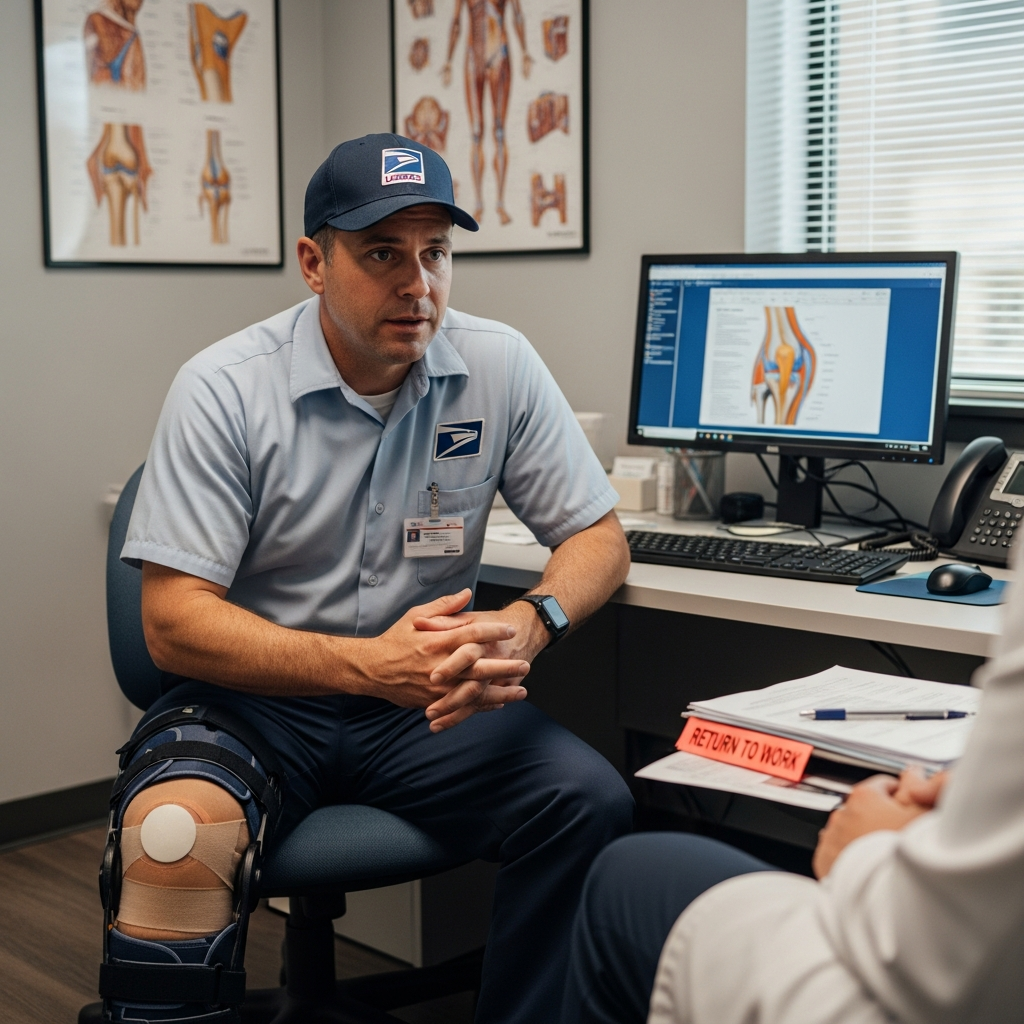
For example, consider a postal worker who suffers a back injury while lifting heavy mailbags. Under federal workers’ compensation, the injured postal worker would receive benefits to cover medical expenses and part of their wages as they recover, regardless of whether the injury was their fault or not.
Step 2: Reporting an Injury or Illness
When a federal employee sustains an on-the-job injury or contracts a work-related illness, they must report it to their supervisor immediately. The injured worker should complete Form CA-1 for traumatic injuries or Form CA-2 for occupational diseases.
For instance, consider a park ranger who contracts Lyme disease while on duty in a national park. They would fill out Form CA-2 to initiate their claim process. It’s crucial to report injuries and illnesses as soon as possible because delayed reporting could jeopardize eligibility for some benefits.
Step 3: Filing a Claim
After reporting the injury, the next step is to file a claim with the OWCP. The injured federal employee should submit the completed Form CA-1 or CA-2, along with any supporting medical documentation, to the OWCP through their employing agency’s workers’ compensation program.
Recall our postal worker with the back injury. They would need to submit Form CA-1, along with medical records detailing the extent of their injury, recommended treatment, and estimated recovery time.
Step 4: Claim Review and Decision
Once the OWCP receives the claim, they will review it in detail. This review process can take several weeks or even months. The OWCP will evaluate the claim based on the evidence provided, including medical documentation and the circumstances around the injury or illness.
In our park ranger’s case, the OWCP would examine the evidence to verify that their Lyme disease was contracted while performing federal duties. If approved, the ranger would be eligible for medical benefits and wage loss compensation for time off work due to the illness.
Step 5: Receiving Benefits
If a claim is approved, the injured worker will start receiving benefits. These usually cover necessary medical treatment and rehabilitation costs related to the injury or illness. In addition, if the employee has to miss work due to their condition, they may receive compensation for lost wages.
For example, our injured postal worker could receive benefits to cover their medical costs (i.e., doctor visits, physical therapy) and a portion of their regular wages if they were unable to work during recovery.
Step 6: Returning to Work
The ultimate goal of federal workers’ compensation is to help injured workers return to work as soon as they are medically able. Depending on the nature of the injury or illness, this might involve modified duties or a transitional work program.
For instance, our postal worker, once recovered, may return to work initially with modified duties that don’t involve heavy lifting until they are fully rehabilitated.
Remember, each case is unique and can vary based on numerous factors. Therefore, it’s crucial for federal employees to understand their rights and responsibilities under federal workers’ compensation. If a situation arises where an employee is unsure or feels their claim is not being handled correctly, seeking professional advice from an attorney specializing in federal workers’ compensation can be beneficial.
Understanding Federal Workers’ Compensation: Challenges, Solutions, and Expert Tips
Introduction:
Federal Workers’ Compensation is an essential program that comes into play when federal employees get injured or ill due to their job duties. The Office of Workers’ Compensation Programs (OWCP) administers four major disability compensation programs providing wage replacement benefits, medical treatment, vocational rehabilitation, and other benefits to federal workers or their dependents who are injured at work or acquire an occupational disease.
Common Challenges:
One of the primary challenges related to federal workers’ compensation is the complex bureaucratic process. The inflexible and lengthy process can be daunting, frustrating, and confusing for claimants. The lack of transparency and limited communication from the authorities further exacerbate these problems.
Another challenge is the strict documentation requirements. Precise, timely, and complete documentation is crucial to successfully navigate the system, which can be burdensome for employees already dealing with health issues.
Misinterpretation of the rules and regulations is another hurdle. Often, there are misconceptions about eligibility criteria, types of injuries covered, and compensation amount, leading to denied claims or reduced benefits.
Solutions and Expert Tips:
The key to overcoming these challenges lies in understanding the federal workers’ compensation system comprehensively. Here are some solutions and expert tips
1. Get Professional Help: Due to the complexity of the process, seeking advice from experienced workers’ compensation attorneys who specialize in federal claims can be beneficial. They can guide you through the process, manage paperwork, and advocate on your behalf.
2. Timely Reporting: Report any work-related injury or illness promptly. Delayed reporting could jeopardize your claim. It’s crucial to inform your supervisor in writing and fill out Form CA-1 (for traumatic injuries) or Form CA-2 (for occupational disease) as soon as possible.
3. Thorough Documentation: Keep a meticulous record of all medical treatments, medical bills, loss of income, and any changes in your health status. This documentation will be invaluable when determining the compensation amount.
4. Education: Educate yourself about your rights and responsibilities under the Federal Employees’ Compensation Act (FECA). Understanding the nuances of the law can help you avoid common pitfalls and misconceptions.
Misconceptions:
Some common misconceptions about federal workers’ compensation are
– “Only severe injuries are covered”: This is not true. Any injury or illness that occurs due to your job duties, no matter how minor, can qualify for workers’ compensation.
– “You can’t get compensation if the injury was partially your fault”: Workers’ compensation is a no-fault system. Even if you contributed to your injury, you are still eligible for benefits, as long as the injury occurred during the course of employment.
– “You can’t claim compensation if you’re a part-time or temporary worker”: All federal employees, irrespective of their employment status, are covered under FECA.
Best Practices:
1. Consult a healthcare provider promptly after an injury or illness. This will not only ensure your well-being but also establish a medical record linking the injury to your work.
2. Keep a copy of all forms, letters, and documents related to your claim for future reference.
3. Maintain open communication with your employer and update them on your recovery progress. This cooperation can expedite your return to work and maintain a positive relationship with your employer.
In conclusion, navigating federal workers’ compensation can be challenging but not insurmountable. By understanding the system, maintaining thorough documentation, and seeking professional help, you can ensure that you receive the benefits you deserve.
Understanding Federal Workers’ Compensation: Expectations, Timelines, and Next Steps
Federal workers’ compensation is a critical program designed to protect federal employees who suffer from work-related injuries or illnesses. If you are a federal employee, it is essential to understand how this program works, the timelines involved, and the subsequent steps you need to take to ensure you receive the benefits owed to you.
Federal workers’ compensation, also known as federal workers comp or federal work comp, is managed by the Office of Workers’ Compensation Programs (OWCP), under the Department of Labor (DOL). Unlike private or state workers’ compensation programs, federal workers’ compensation covers civilian employees of the federal government.
When an injury or illness occurs due to or in the course of employment, federal workers’ compensation provides benefits including medical care, compensation for lost wages, and vocational rehabilitation services if necessary. It also provides survivor benefits to dependents if the injury results in death.
The process begins once an injury or illness has been reported. The injured federal worker must file a claim with the OWCP as soon as possible. Timeliness is crucial. According to the Federal Employees’ Compensation Act (FECA), you should report an injury within 30 days and a work-related illness within 30 days of becoming aware of it.
After you have reported your injury or illness, you will need to complete Form CA-1 or CA-2, depending on whether it was a traumatic injury or an occupational disease. Form CA-1 should be filed within 30 days of the injury, while Form CA-2 should be filed within 30 days of becoming aware of the occupational disease’s link to employment.
Once the OWCP receives your claim, they will review it for completeness and accuracy. This process can take anywhere from a few weeks to several months, depending on the complexity of your case. If your claim is approved, you will start receiving benefits. If it’s denied, you have the right to appeal, and it’s recommended to seek legal advice at this stage.
From the moment of injury or illness, federal workers should be proactive in seeking medical attention. Under the federal workers comp, injured employees have the right to choose their treating physician. However, they need to ensure that treatment is sought from a qualified medical provider who accepts OWCP patients.
One critical point to remember is that federal workers’ comp is not a permanent benefit. The OWCP’s goal is to get the injured worker back to work as soon as it’s medically safe. Therefore, you may undergo periodic medical evaluations to assess your progress and establish whether you’re fit to return to work.
In cases where you are unable to return to your previous job due to disabilities caused by the injury or illness, federal workers’ compensation offers vocational rehabilitation services. These services aim to help injured workers find new jobs within their physical limitations.
To summarize, federal workers’ comp ensures that federal employees who suffer work-related injuries or illnesses have access to medical care, wage replacement benefits, vocational rehabilitation, and other assistance.
Navigating the complexities of federal workers’ compensation can be daunting, but understanding the process and timelines can significantly ease the burden. It’s crucial to report injuries or illnesses promptly, complete the appropriate forms, stay proactive in your medical treatment, and cooperate fully with all OWCP requests for information or examinations.
In all steps of this process, it’s beneficial to have knowledgeable legal counsel or a trusted advocate to help guide you through the intricacies of the federal workers’ comp system. With this guidance and understanding of the process, you can focus on what’s most important – your recovery.
In summary, it’s clear that federal workers’ compensation is a comprehensive, albeit complex, system in place to protect and support federal employees who suffer from work-related injuries or illnesses. Understanding the nuances of this system is crucial for anyone operating within the federal workspace. This is because, as we have elucidated throughout this article, the benefits provided under this system are designed to alleviate the financial burden that often accompanies work-related injuries or illnesses.
At its core, the Federal Employees’ Compensation Act (FECA), which governs federal workers’ compensation, ensures that federal employees have a safety net in the unfortunate event of a work-related injury or illness. It provides coverage for medical expenses, rehabilitation costs, and partial wage replacement in case of temporary or permanent disability. In the tragic event of a worker’s death due to a work-related incident, FECA also provides compensation for survivors.
A key takeaway from our discussion is that federal workers’ compensation operates differently from state workers’ compensation systems. Unlike most state systems, which require proof of employer negligence for a claim to be valid, FECA operates under a no-fault system. This means that federal employees are entitled to benefits regardless of who was at fault for the injury or illness. However, it’s important to note that certain conditions must still be met for a claim to be accepted – namely, the injury or illness must have occurred within the performance of duty and the claim must be filed within a certain time frame.
Another crucial point is that navigating the claims process can be challenging due to the detailed and specific nature of FECA regulations. The process requires precise documentation and strict adherence to deadlines, which can be daunting for individuals dealing with the stress and discomfort of an injury or illness.
Furthermore, we can’t overstate the importance of understanding your rights and responsibilities under FECA. As a federal employee, you have the right to file a claim for compensation without fear of retaliation from your employer. You also have the responsibility to report your injury or illness as soon as possible and to cooperate fully with all medical examinations and treatments.
In conclusion, while the federal workers’ compensation system is extensive and complex, it is ultimately designed to support and protect you, the federal employee. However, navigating this system and ensuring that you receive the full benefits you are entitled to can be a complicated and stressful process.
Given these complexities, it’s highly advisable to seek professional guidance when dealing with federal workers’ compensation claims. Having an expert by your side can alleviate much of the stress and uncertainty, ensuring that your claim is handled correctly and efficiently.
At our firm, we have dedicated our practice to understanding every nuance of federal workers’ compensation, and we are committed to helping federal employees navigate this complex system. If you have suffered a work-related injury or illness, we encourage you to reach out to us. Our team of experienced professionals is ready to assist you every step of the way, from understanding your eligibility and rights under FECA, to guiding you through the claims filing process, to advocating for your interests in case of disputes.
Remember, you don’t have to go through this process alone. Contact us today, and let us help you secure the compensation you are entitled to. Your well-being is our priority, and we’re here to ensure that the federal workers’ compensation system works for you, not against you.